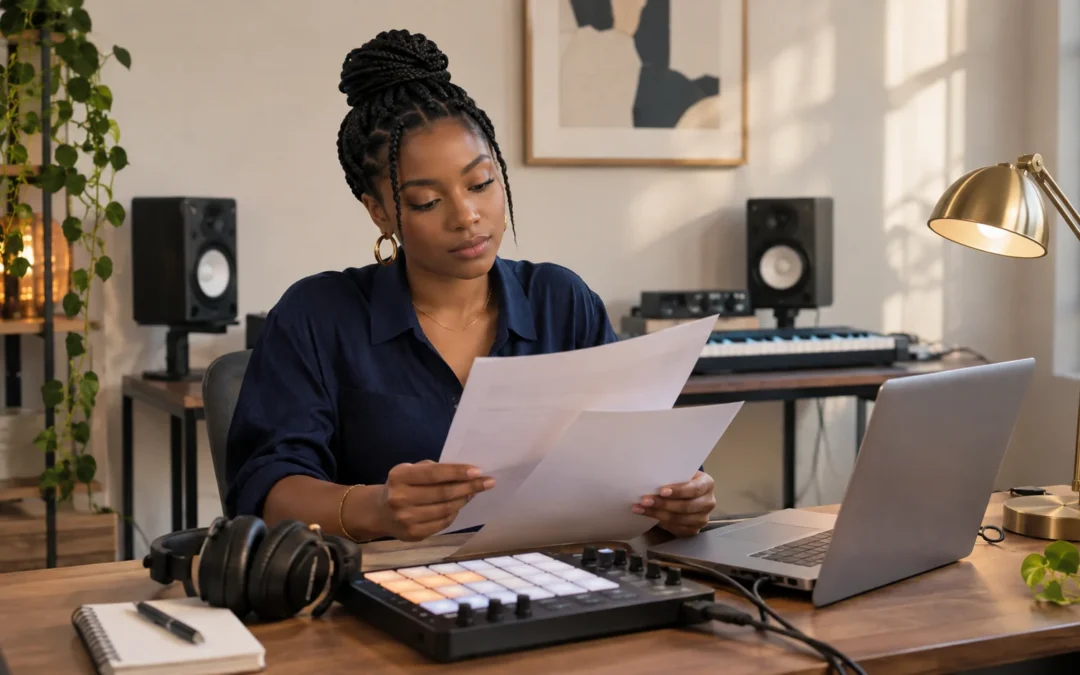
Buying or downloading a beat does not tell you everything you may do with it. Read the license that came with the exact purchase and identify any material incorporated into the beat.
The Copyright Office’s guide to samples, interpolations and beat stores explains why preexisting music can involve different works and permissions. A sample uses part of an existing recording; an interpolation involves recreating material rather than using that recording. The distinction does not, by itself, answer every permission question.
A pre-release license check
- Save the license version, receipt and seller’s identifying information from the purchase. Keep them with the final track files.
- Check permitted distribution and promotional uses, any limits, credit requirements and whether the license is exclusive or nonexclusive.
- Ask about samples or other third-party material. Identify who is responsible for obtaining any additional permissions rather than assuming the beat seller has cleared everything.
- Review ownership, publishing shares and any registration or content-identification restrictions. Keep the written agreement separate from informal messages.
Useful resources
Copyright Office guide to samples and beat stores — explains samples, interpolations, licenses and issues when building new music from existing material.
Copyright Office musician resources — provides a broader introduction to music rights and permission questions.
If the license is unclear, address the question before releasing the track or making a promise to a distributor. “Royalty-free” and “exclusive” are labels to check against the actual terms, not substitutes for reading them.
Have a question about your situation? Request a consultation with Arrington & Phillips.
General information, not legal advice for a specific matter.